The short answer
Choose an enclosure by working from the environment inwards, not from the PCB outwards. Fix the installation environment first — that sets your IP and IK ratings, which set your material options, which narrow the formats worth comparing. Most enclosure mistakes happen in the other direction: a box is sized to fit the board, and the environment is discovered too late.
- Indoor, controlled environment: ABS, IP54 or lower is usually fine
- Outdoor or wash-down: polycarbonate or GRP, IP66 minimum
- RF-sensitive or heat-generating electronics: aluminium
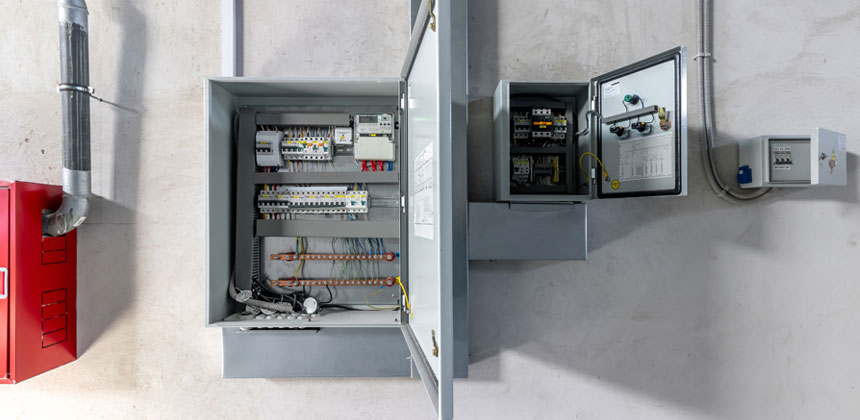
- Industrial control panels and switchgear: steel
- Every cut-out you make downgrades the IP rating unless it's sealed back to the same standard
An electronic enclosure is the housing that stands between your electronics and everything that wants to destroy them — dust, water, impact, interference, and occasionally the people installing them. Rapid stocks over 3,000 enclosures, boxes and cases, from project boxes the size of a matchbox to 19-inch rack cabinets, and this guide covers how to narrow that range down to the right one: material, ingress protection, mounting format, EMC, and when a specialist type earns its higher price.
Why does enclosure choice matter so much?
Because the enclosure is usually the last thing specified and the first thing to fail. A design that works flawlessly on the bench can be killed in the field by condensation inside an unvented box, a lid that cracks under a dropped tool, or interference the plastic housing never stood a chance of blocking. Unlike a firmware bug, an enclosure failure means physical rework: new boxes, re-machining, site visits. Getting it right at the design stage is one of the cheapest pieces of insurance available to an OEM.
The decision touches material science, ingress protection standards, thermal behaviour, compliance and — for anything customer-facing — the look of the finished product. But it decomposes into a handful of questions, and they have a natural order.
How should you specify an enclosure? Work from the environment inwards
Start with where it lives. An enclosure destined for a plant room, a vehicle, or an outdoor pole faces a completely different threat model to one sitting on a lab bench. The environment dictates the minimum IP rating — IP54 is adequate for benign indoor use, wash-down and outdoor installations want IP66 or better, and anything that might sit in standing water needs IP67 or IP68. Marine and chemical environments add a corrosion question that often rules out plain steel before you've considered anything else.
Then ask what will hit it. Impact resistance is rated separately from ingress protection, and it's routinely overlooked. An IP66 box with a thin lid will keep the rain out right up until a pallet clips it. On factory floors, in transport applications, or anywhere the public can reach, check the IK rating — IK08 and above is where genuinely rugged enclosures start.
Then ask what the electronics need from the box itself. Two things matter here: shielding and heat. If your circuit radiates EMI or is susceptible to it, plastic offers no inherent protection — you need a metal enclosure with a proper earth path, or a shielded enclosure with a conductive lining. If the design dissipates real power, the enclosure is part of the thermal circuit: an extruded aluminium case can double as the heat sink, whereas a sealed plastic box is close to a thermos flask. Note the tension — high IP ratings and free airflow pull in opposite directions, which is why hot electronics in wet environments usually end up in finned aluminium.
Only then choose the format. Wall mount, DIN rail, handheld, rack, floor-standing — by this point the environment and the electronics have usually made the decision for you, and what remains is checking internal dimensions against your board, connectors and cable bend radii. Leave more clearance than feels necessary; wiring always takes more room than the CAD model suggests.
Finally, plan the holes. Connectors, glands, displays and switches all need apertures, and this is where specifications quietly fall apart: an IP66 rating applies to the enclosure as it left the factory. Every cut-out you add is a downgrade unless the gland, connector or gasket sealing it is rated to the same standard. Decide early whether you'll machine enclosures in-house or have them arrive ready to wire — Rapid's enclosure modification service handles cut-outs, engraving and paint before dispatch.
Which enclosure material should you choose?
Material sets the baseline for nearly everything else — weight, impact behaviour, UV stability, shielding and machinability all follow from it.
ABS
ABS is the default plastic for indoor, general-purpose work, and deservedly so: it's cheap, machines cleanly with ordinary workshop tools, takes labels and printing well, and is widely available in UL94-V0 flame-retardant grades. Its weakness is sunlight — standard ABS isn't UV-stabilised and will yellow and embrittle outdoors. Use it for prototypes, lab instruments and light industrial builds where the environment is controlled; don't specify it for anything that lives outside.
Polycarbonate
Polycarbonate is what you reach for when ABS runs out of road. It's substantially tougher, naturally UV-resistant, and commonly moulded with clear lids — genuinely useful when someone needs to read status LEDs without breaking the seal. CamdenBoss's X-series, for example, pairs IK09 impact resistance with IP66/67 sealing. It costs a little more than equivalent ABS, which is the entire trade-off: for outdoor or semi-exposed installations, pay it.
Aluminium
Aluminium gives you two things plastic never will: inherent EMC/RFI shielding and useful thermal conductivity. It's light for its strength and easy to machine, which makes extruded aluminium profiles the standard housing for bench instruments, audio equipment and embedded systems. Where the case needs to shed heat as well as shield, heat sink enclosures with integral fins let the housing do the thermal work passively.
Steel
Steel is the industrial workhorse: maximum rigidity, excellent low-frequency shielding, and near-immunity to casual physical damage. The costs are weight and machinability — cutting clean apertures in a steel panel is a different proposition to drilling ABS. It remains the standard for control panels, distribution boards and fixed heavy-duty installations where nobody is carrying the enclosure anywhere.
GRP
Glass-reinforced polyester is the specialist's answer to hostile outdoor environments: non-conductive, transparent to radio frequencies, and highly resistant to UV and corrosion. Where a steel box would rust and an aluminium one would corrode galvanically, GRP shrugs — which is why it dominates outdoor metering and EV charging infrastructure. R-TECH and Fibox both supply GRP enclosures through Rapid.
| Material |
Strengths |
Watch out for |
Typical applications |
| ABS |
Low cost, easy to machine, prints well |
Degrades in UV; no shielding |
Indoor instruments, prototypes |
| Polycarbonate |
Tough, UV-resistant, clear lids available |
Costs more than ABS; no shielding |
Outdoor and industrial installations |
| Aluminium |
EMC shielding, conducts heat, light |
Galvanic corrosion in marine settings |
RF, audio, test and embedded equipment |
| Steel |
Maximum rigidity and impact resistance |
Heavy; harder to machine; can rust |
Control panels, distribution boards |
| GRP |
Corrosion-proof, UV-stable, RF-transparent |
No shielding; premium price |
Outdoor metering, EV infrastructure |
What do IP and IK ratings actually mean?
IP ratings are defined by IEC 60529. The first digit describes protection against solid particles (0–6), the second against liquids (0–9K). IK ratings, defined by IEC 62262, describe resistance to mechanical impact on a scale of 0 to 10. The two systems are independent — a box can be watertight and fragile, or armoured and leaky — so check both against your environment.
| Rating |
What it means |
Typical application |
| IP54 |
Dust protected; splash-proof from any direction |
Light industrial, indoor control panels |
| IP65 |
Dust-tight; resists low-pressure water jets |
Outdoor signage, agricultural machinery |
| IP66 |
Dust-tight; resists high-pressure water jets |
Wash-down environments, outdoor junction boxes |
| IP67 |
Dust-tight; temporary immersion to 1m depth |
Underground installations, marine deck fittings |
| IP68 |
Dust-tight; continuous immersion at an agreed depth |
Submersible sensors, underwater equipment |
| IK08 |
Resists 5 joules of impact energy |
Semi-exposed industrial panels |
| IK09 |
Resists 10 joules of impact energy |
High-traffic industrial or public installations |
| IK10 |
Resists 20 joules of impact energy |
Vandal-resistant enclosures |
The rating trap: an IP rating certifies the enclosure as manufactured. The moment you drill it, the rating is gone unless the gland, connector or gasket filling the hole is rated to the same standard. Specify IP-rated cable glands to match the box, and count every aperture in your design review.
Which enclosure type fits your application?
Building a control panel? Components that live on 35mm rail — relays, terminal blocks, PSUs — belong in DIN mount enclosures, which snap on in modular widths so a panel can grow one unit at a time. The panel itself typically goes in a wall mount enclosure, in steel for fixed industrial installations or polycarbonate where weight and corrosion matter. For plain wiring joints in an electrical installation, a junction box with the right IP rating is all that's needed.
Housing an instrument? Bench and handheld test equipment has its own established formats: instrument cases with sloped or flat front panels for benchtop use, and ergonomic handheld enclosures — often with battery compartments moulded in — for anything carried into the field. For rack-mounted AV, telecoms or server equipment, 19" enclosures follow the standard rack unit dimensions.
Prototyping or productionising an SBC design? Development board enclosures arrive pre-cut for Raspberry Pi, Arduino and similar boards — port apertures and mounting bosses in the right places, no machining required. For general one-off project work, a plain ABS box is usually the fastest route from breadboard to something you can hand over.
Dealing with something harsher or more specific? Heavy duty enclosures cover transport and rough-service applications; potting boxes are open-based shells designed to be filled with resin, encapsulating the PCB entirely for vibration-heavy or condensing environments; and PSU and transformer cases are dimensioned around toroidal transformers and open-frame supplies. Whatever the format, enclosure accessories — mounting plates, DIN inserts, locks and hinges — turn a bare box into a finished assembly.
Do you need enclosures modified before delivery?
Standard enclosures rarely arrive ready to use, and machining them in-house eats engineering time while putting IP ratings at risk from imperfect cut-outs. Rapid's enclosure modification service delivers boxes pre-machined and ready to wire: connector, switch and display cut-outs; engraving and digital printing for logos, labels and compliance markings; and RAL paint colours. It covers ABS, polycarbonate and aluminium enclosures across brands including Hammond and CamdenBoss — note that additional charges may apply for orders under 25 units or unusual specifications.
Browse over 3,000 enclosures, boxes and cases from Hammond, CamdenBoss, Spelsberg, R-TECH, Fibox and more.
Shop all enclosures
Frequently asked questions
What is the difference between ABS and polycarbonate enclosures?
Polycarbonate is tougher and naturally UV-resistant; ABS is cheaper and easier to machine. Use ABS for controlled indoor environments and polycarbonate for outdoor, industrial or high-impact installations. Polycarbonate is also commonly available with transparent lids, and both materials come in UL94-V0 flame-retardant grades.
What does the IP rating on an enclosure mean?
An IP rating (IEC 60529) uses two digits: the first for protection against solids (0–6), the second against liquids (0–9K). IP66 means dust-tight and resistant to powerful water jets; IP67 adds temporary immersion. The rating only holds if every cut-out is sealed to the same standard.
When do I need a metal or shielded enclosure?
Whenever your circuit radiates electromagnetic interference or is susceptible to it. A grounded aluminium or steel enclosure attenuates unwanted signals; plastic provides no inherent shielding. Shielded enclosures with conductive linings offer an alternative where a plastic housing is otherwise preferred.
Can I get enclosures machined to my specification?
Yes. Rapid's enclosure modification service covers cut-outs, engraving, digital printing and RAL paint colours across ABS, polycarbonate and aluminium enclosures, including Hammond and CamdenBoss ranges. Enclosures arrive pre-machined and ready to wire, with sealing preserved on rated boxes.
Related categories
Terminal blocks ·
DIN rails & accessories ·
Cable accessories ·
Thermal management ·
Connectors ·
Switches


 {{SessionBasket.ItemCount }}
