Thermal Management
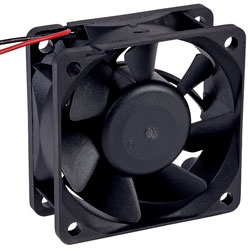
Heat is the quiet enemy of reliability — every component that passes current makes some, and the hotter a part runs, the shorter its life. Thermal management is giving that heat a path out: conducting, spreading and moving it away. The range covers cooling fans for active airflow and the mounting hardware and accessories — clips, thermal pads and compounds — that move heat from a device into a heatsink or case.
Top Brands In Thermal Management
Keeping electronics cool
Passive cooling or a fan?
Reach for passive cooling first. A heatsink with enough surface area, clear airflow paths and a proper thermal joint will keep many designs cool with no moving parts to fail or power to draw. Add a fan when the heat load, a sealed enclosure or a high ambient temperature means natural convection is not enough. Plenty of designs combine the two — a heatsink to spread the heat and a fan to carry it away. Sizing the passive path properly first usually means a smaller, quieter fan, or none at all.
Why does the thermal joint matter?
Because heat has to cross from the device to the heatsink, and a poor joint throttles everything downstream. Even flat surfaces touch only at their high spots, leaving insulating air gaps; a thin layer of thermal compound or a thermal pad fills them so heat conducts properly, while an insulating pad or bush isolates the device electrically where the heatsink is earthed. For mounting power semiconductors in particular, the clips, pads and insulating kits in semiconductor hardware are made for the job.
Where does cooling fit in a design?
Wherever power is dissipated. Power semiconductors — regulators, transistors and rectifiers — are the usual hotspots, along with power supplies and drives. In a sealed or tightly packed build, a heat-sink enclosure makes the case itself the cooling surface, and ventilated enclosures with a fan and filtered inlet keep a panel in temperature. Planning the heat path early — which parts run hot, and how the heat leaves the case — saves reworking a design that runs too warm in service.


 {{SessionBasket.ItemCount }}