A cable run is only as tidy, safe and serviceable as the bits holding it together. Ties, glands, grommets, heat shrink and markers turn a loose bundle into something you can still trace in ten years' time, and our own UniStrand range has most of the everyday essentials covered.
Sealing the way in: glands and grommets
Wherever a cable passes into an enclosure, something has to seal it and stop it being pulled. A cable gland does both. Choose it by the cable's outside diameter (each gland has a clamping range), the thread of the entry hole (M20 and M25 are the common metric sizes) and the IP rating you need. Nylon suits most indoor and general work, brass is the choice for tougher environments, and armoured cable needs a dedicated armoured gland.
Grommets do a simpler but just as important job, lining a hole in sheet metal so the edge can't cut into the insulation over time. Size them by the panel hole and the panel thickness. Blind grommets also close up spare holes neatly.
Heat shrink and sleeving
Heat shrink tubing is sold by its shrink ratio. 2:1 is fine over a plain joint, while 3:1 or 4:1 will grip a connector body and the cable behind it in one piece. Adhesive-lined, dual-wall tube adds a seal against moisture, which is what you want on vehicles, outdoors and anywhere that gets washed down. A heat shrink kit is a good way to keep the common sizes to hand.
Sleeving slides over the cable rather than shrinking onto it. Braided expandable sleeving protects against abrasion and bundles cables loosely, while PVC sleeving insulates and colour-codes earth leads.
Bundling, routing and marking
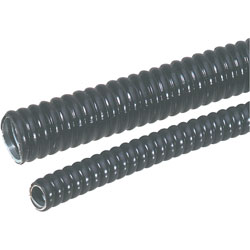
Standard nylon cable ties are for indoor use. Outdoors, choose black UV-stabilised ties, and for heat or harsh chemicals, stainless steel. Cable clips fix a run to a surface, while conduit and trunking carry it through a panel or along a wall. Finish with cable markers at both ends of every core. It's the single best investment in future maintenance. Planning a full panel? Our guide to cable management for industrial panels brings it all together.
UniStrand: more than just the cable
Most people know UniStrand for its hook-up wire. Fewer realise it also covers the accessories that finish the job: ties, sleeving, heat shrink and more, sized and rated to match the branded parts. If you're wiring with UniStrand already, it makes sense to finish with it too.
Cable accessory questions
What temperatures can nylon cable ties handle?
Standard nylon 6.6 ties typically cover around -40°C to +85°C. Heat-stabilised ties go higher, and stainless steel is the answer near exhausts, ovens and other hot spots. Check the rating on the product page.
Do I need a heat gun for heat shrink?
Yes. A hot-air gun shrinks the tube evenly from the middle outwards. A lighter or naked flame tends to scorch one side before the other has recovered.
What's the difference between conduit and trunking?
Conduit is a round tube that protects a fixed run. Trunking is a rectangular channel with a removable lid, so you can add or remove cables later. That's why trunking dominates inside control panels.
What's the best way to label cables in a panel?
Mark both ends of every core with the same reference used on the drawings. Printed markers from a label printer stay readable far longer than handwriting.
How do I protect cables that cross a floor?
Use a floor cable protector. It shields the cable from foot and trolley traffic and removes a trip hazard, which matters in workshops, labs and at events.


 {{SessionBasket.ItemCount }}