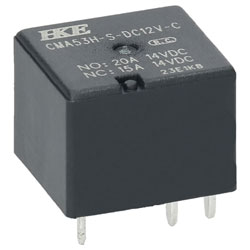
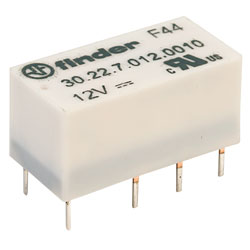
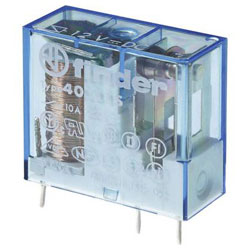
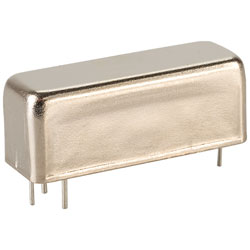
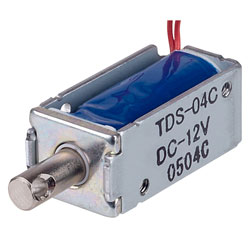
A relay lets a small control signal switch a much larger load — a few milliamps at the coil closing contacts that carry mains, motors or heaters, with full isolation between the two sides. That is why relays sit at the heart of control panels and machinery. The range runs from general-purpose power and plug-in relays to signal and telecoms and reed types, plus solid-state relays for silent, fast, wear-free switching.
Choosing and using relays
How do I choose the right relay?
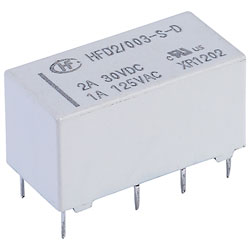
Start with the two sides separately. The coil is chosen for the control voltage available to switch it — 5, 12 and 24 V DC and mains AC coils are all common. The contacts are chosen for the load: the current and voltage they must make and break, whether that load is AC or DC, and whether it is resistive or inductive — a motor or lamp needs more headroom than its steady current suggests. Then the contact arrangement, such as SPDT or DPDT, and the mounting: PCB, plug-in or panel.
Electromechanical or solid-state?
An electromechanical relay uses a coil to move physical contacts: it is inexpensive, handles AC or DC, and gives a real air gap when open, but the contacts wear and switch relatively slowly. A solid-state relay switches electronically with no moving parts, so it is silent, fast and effectively unlimited in life, and suits frequent switching — at the cost of a little on-state heat that often needs a heatsink. Choose electromechanical for general, occasional switching and isolation on a budget; solid-state for high cycle rates, silent running or long service life.
How do I drive and mount a relay?
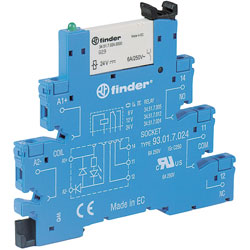
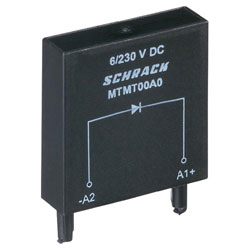
A coil often needs more current than a microcontroller pin can give, so a relay board or relay module — with the driver, flyback protection and terminals built in — is the tidy way to switch one from a logic signal or single-board computer. For panels, plug-in types drop into sockets on DIN rail for quick replacement. Sockets, hold-down clips and other accessories are stocked to match, along with automotive relays for 12 and 24 V vehicle use, and solenoids where you need linear mechanical force rather than a switched contact.
When do I need a contactor instead?
For heavier loads — motors, three-phase supplies, large heaters — a contactor is the right tool: essentially a heavy-duty relay built to switch high currents repeatedly and safely. Relays handle control and lighter switching; contactors take over as the current climbs. In a panel, both sit alongside the switches, terminal blocks and DIN rail that wire a control system together.


 {{SessionBasket.ItemCount }}