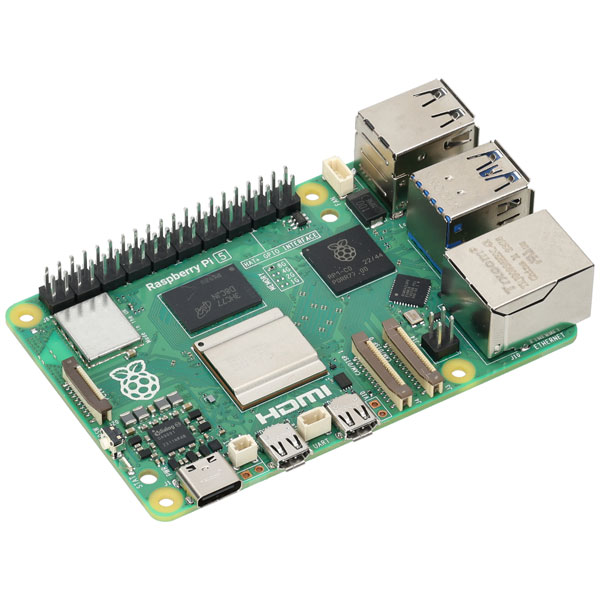
A Raspberry Pi is a low-cost, credit-card-sized computer on a single board, designed and supported by the UK-based Raspberry Pi. The larger models run a full Linux desktop from a memory card; the Pico line is a tiny microcontroller for embedded electronics. Between them, the range covers everything from learning to code to running industrial hardware.
Which Raspberry Pi should you choose?
The range splits into a few clear families. Match the board to the job:
- Raspberry Pi 5 — the flagship board for desktop-class projects, media, servers and demanding maker builds.
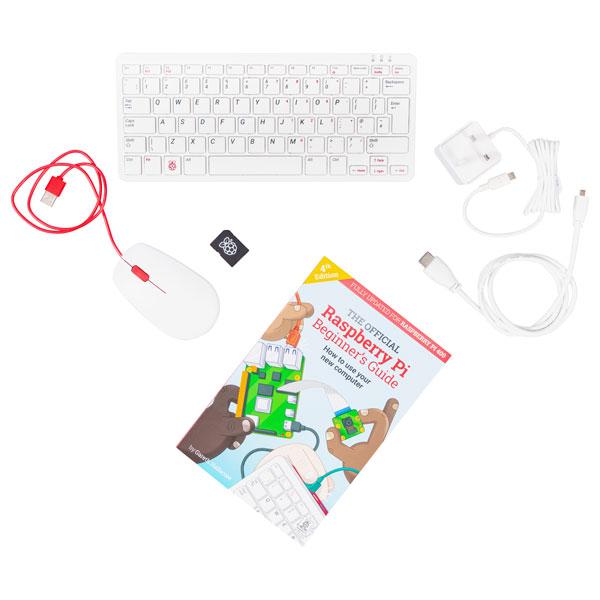
- Raspberry Pi 500 — a complete computer built into a keyboard, ideal for education and a tidy desktop setup.
- Raspberry Pi Zero 2 W — a tiny, low-power board for compact and battery-friendly projects.
- Raspberry Pi Pico and Pico 2 — low-cost microcontrollers (RP2040 and RP2350) for embedded electronics, sensors and real-time control.
- Compute Module — the Raspberry Pi in a module format for building into your own products and industrial hardware.
You can compare the full line-up across our Raspberry Pi boards and microcontrollers, or start with a kit if you would rather begin with everything in one box.
The accessories that make a project work
A board is only the start. The right add-ons turn it into something that runs reliably:
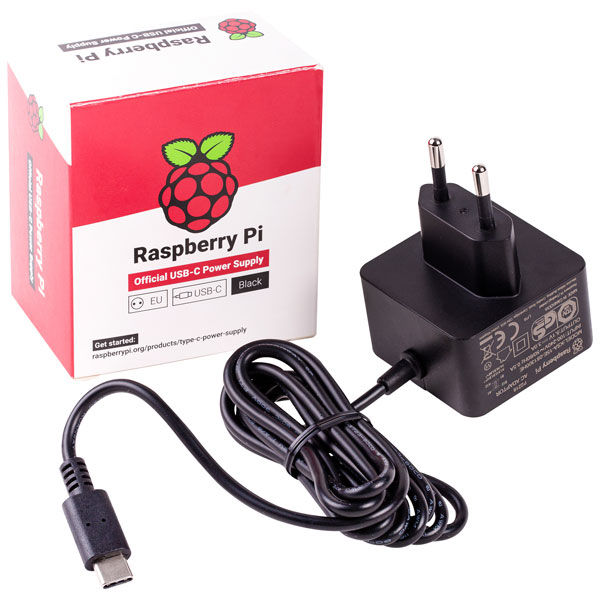
- Power supplies and cooling — the correct supply and a heatsink or fan keep a Pi stable under load.
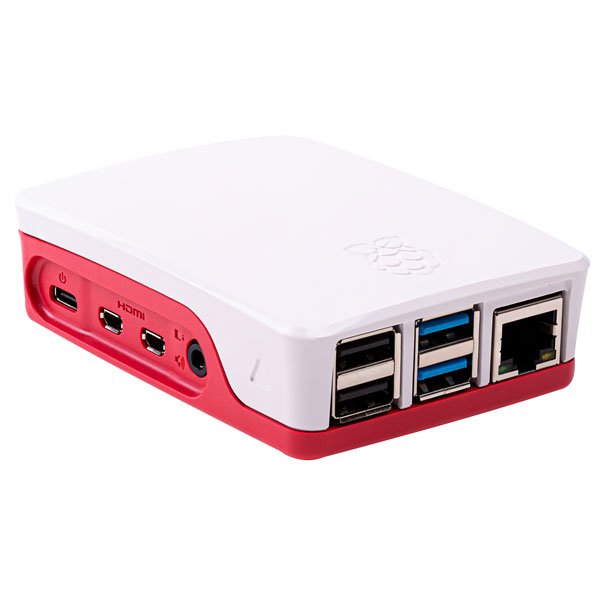
- Cases — protect the board and, on the Pi 5, house active cooling.
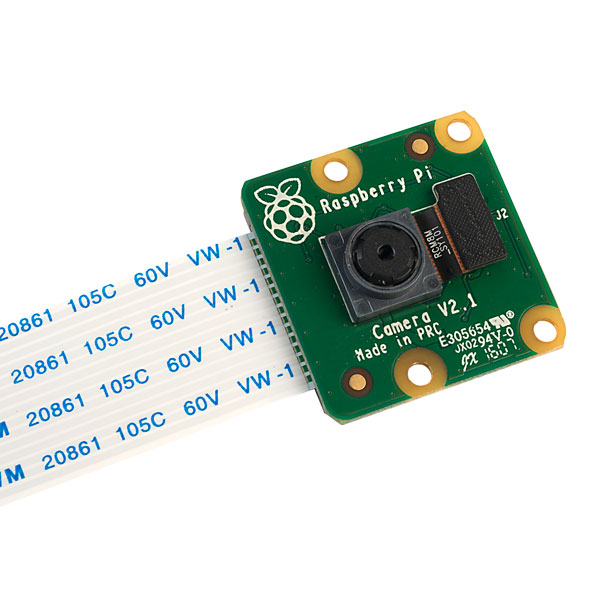
- Camera modules — for vision, monitoring and imaging projects.
- HATs and breakout boards — add-on boards that expand a Pi with sensors, motor drivers and connectivity.
- Storage — memory cards and drives to hold the operating system and your data.
Raspberry Pi for AI and machine learning
Recent Raspberry Pi hardware has pushed into on-device AI. Add-on AI accelerators, such as the AI HAT+, let a Pi 5 run computer-vision and machine-learning models locally — useful for smart cameras, detection and edge-AI projects that need to work without the cloud. It is one of the fastest-growing uses of the platform, and a good reason to size your power and cooling generously.
Where Raspberry Pi is used
The platform reaches well beyond the classroom: teaching coding and computing, IoT and home automation, industrial control and embedded products via the Compute Module, media centres and home servers, robotics, and rapid prototyping. Its low cost and huge community make it the default board for turning an idea into working hardware.
Exploring other boards too? See the wider single-board computer range to compare Raspberry Pi with the alternatives.
Raspberry Pi: frequently asked questions
Which Raspberry Pi should I buy?
For desktop-class projects, choose the Raspberry Pi 5; for a ready-to-use computer, the Pi 500; for compact, low-power builds, the Zero 2 W; and for embedded electronics, the Pico or Pico 2 microcontroller. Match the board to how much computing power the project needs.
What is the difference between a Raspberry Pi and a Pico?
A Raspberry Pi is a full computer that runs Linux from a memory card. The Pico is a microcontroller — a much smaller, lower-cost chip board for embedded electronics and real-time control, similar in role to an Arduino rather than a computer.
What do I need to get started with a Raspberry Pi?
For most boards you need the Pi, a compatible power supply, a memory card with the operating system, and a case. A kit bundles these together. The Pico line needs far less — often just a USB cable and your code.
Do I need a heatsink or fan for a Raspberry Pi 5?
Under sustained load, yes. The Pi 5 runs faster and hotter than earlier models, so active cooling or a heatsink is recommended to keep performance stable and avoid thermal throttling.
Can a Raspberry Pi run AI models?
Yes. A Raspberry Pi 5 with an AI accelerator such as the AI HAT+ can run computer-vision and machine-learning models on the device, making it suitable for smart cameras and edge-AI projects that work without a cloud connection.
Is Raspberry Pi suitable for industrial and product use?
Yes. The Compute Module packages the Raspberry Pi for building into your own products and industrial hardware, and the platform is widely used in commercial and embedded designs, not only in education and hobby projects.


 {{SessionBasket.ItemCount }}