CamdenBoss makes three things well: enclosures, terminal blocks and connectors, all built for industrial, electronics and telecoms environments rather than consumer gear. Rapid stocks the core ranges for same-day despatch, and the rest of the catalogue, including bespoke enclosure fabrication, is available to order.
Enclosures: from a bench box to a weatherproof cabinet
Most projects start with a general purpose box. CamdenBoss's instrument cases, hand-held enclosures and potting boxes cover that ground in ABS or aluminium, and they're the default choice unless something about the installation rules them out.
Something usually does rule them out once the project moves into a control panel. That's where the CNMB series earns its keep: it snap-fits onto standard 35mm DIN rail, so you're not drilling brackets or improvising a mounting plate inside a cabinet that's already tight on space. It's moulded in UL94V-0 flame-retardant polycarbonate, and CamdenBoss sells terminal guards and panel covers as accessories, so a DIN enclosure can go in half-finished and get its wiring protection added once the panel's built out.
Outdoors, or anywhere dust and moisture are a given rather than an edge case, the calculation changes again. CamdenBoss's Hercules range is GRP rather than plastic, rated IP66 and IK10 — in practice, that's dust-tight with protection against powerful water jets, plus enough impact resistance to shrug off a dropped tool or an accidental knock on a site. It's a heavier, pricier option than the general purpose range, and it should be: you're paying for the enclosure to survive conditions the ABS boxes were never meant for.
If none of the standard ranges fit, CamdenBoss's flat sheet fabrication service builds enclosures to your own dimensions, with no tooling charge and no minimum order — a route worth knowing about for runs anywhere from a handful of units to several thousand, where a bespoke box works out cheaper than modifying a standard one.
Terminal blocks and PCB mount: matching the termination to the job
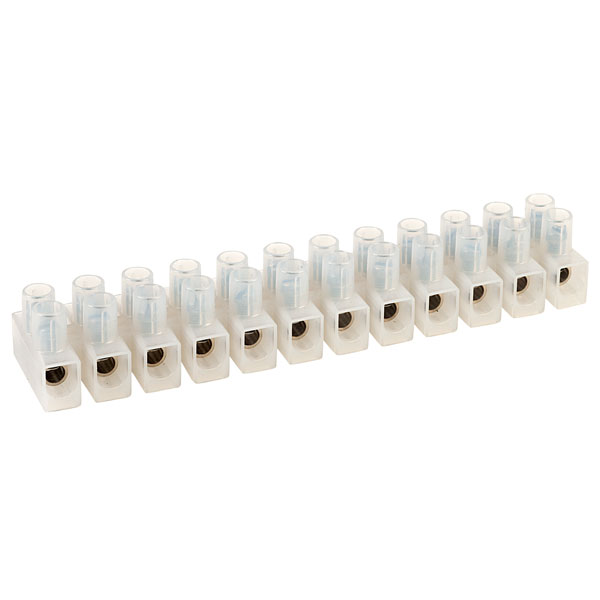
CamdenBoss's terminal blocks come in three termination styles, and the choice usually comes down to who's doing the wiring and how often it'll be touched again. Screw terminals are the default: cheap, dependable, and fine for a panel that gets wired once and left alone. Screwless, rising-clamp versions trade a small cost premium for wiring speed and resistance to loosening under vibration, which matters more on a panel that's bolted to something that moves. Pluggable blocks go a step further and let the whole block separate from its base, so a faulty circuit on a production line can be swapped in seconds rather than rewired from scratch.
Across all three, CamdenBoss covers pitches from 3.5mm to 10.16mm, 2 to 6 ways per block, and current ratings from 8A up to 52A, with UL and VDE approvals throughout.
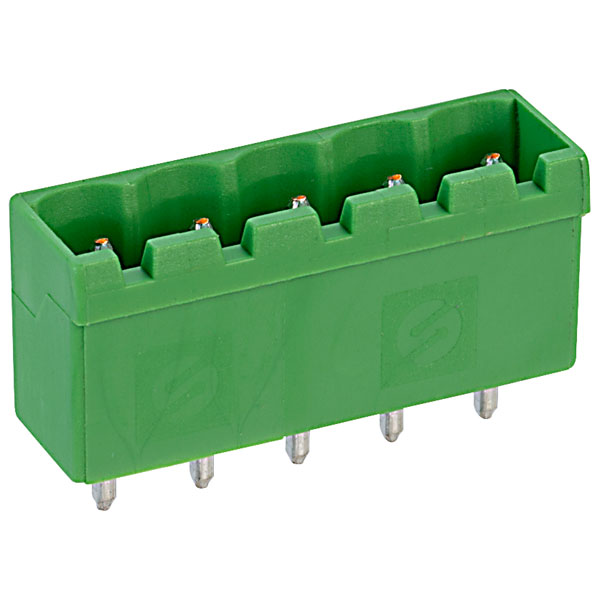
PCB mount terminal blocks solve a different problem: they solder or clamp directly onto the board itself, so field wiring can terminate straight onto the PCB without a separate connector housing in between. It's the right choice when board space is tight and an extra connector body would be one component too many.
Connectors: getting a signal on, and off, the board
Where terminal blocks handle panel wiring, CamdenBoss's plugs and headers handle the board itself. They give you a removable, polarised connection wherever a wire needs to come off a PCB without desoldering, and they're often specified alongside the terminal block ranges on the same board.
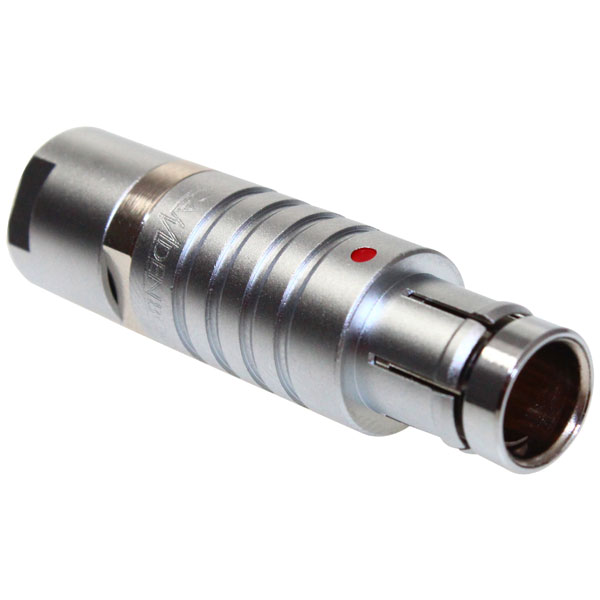
CamCirc picks up where that stops working: the moment a cable has to leave the enclosure altogether and head out into the weather. These are push-pull circular connectors, IP68-sealed using vacuum technology and tested to IEC 60512-3-5a for retention under load, so they won't work loose from vibration or cable strain the way a lesser connector might. They turn up in broadcast rigs, motorsport wiring looms, rail and marine installations, and security and agricultural equipment — anywhere a connector has to survive being handled, flexed and rained on repeatedly, not just sealed once and left alone.
Not sure which range fits your project? Speak to a specialist.
CamdenBoss FAQs
What products does CamdenBoss make?
CamdenBoss manufactures plastic and metal enclosures, PCB, pluggable and screwless terminal blocks, and connectors, including its CamCirc range of circular connectors. Rapid stocks products across all three ranges, with access to the wider CamdenBoss catalogue on request.
Are CamdenBoss enclosures suitable for industrial or outdoor use?
The Hercules range, part of CamdenBoss's heavy duty enclosures line, is GRP construction rated IP66 and IK10 — dust-tight, resistant to powerful water jets, and built to take a physical knock without cracking. The standard ABS and aluminium ranges are better suited to indoor, general electronics use.
What's the difference between general purpose and DIN mount enclosures?
General purpose enclosures are standalone boxes for benchtop or wall-fixed use. DIN mount enclosures like the CNMB series snap directly onto 35mm DIN rail instead, which is what you want inside a control panel or switchgear cabinet where rail mounting is already the standard.
What terminal block options does CamdenBoss offer?
Screw, screwless and pluggable terminal blocks, covering 3.5–10.16mm pitches, 2 to 6 ways, and 8A to 52A current ratings, all UL and VDE approved. Pluggable versions let a faulty circuit be swapped without rewiring the whole block.
Does CamdenBoss make PCB-mount terminal blocks?
Yes. PCB mount terminal blocks solder or clamp directly to the board, terminating field wiring without the extra footprint of a separate connector housing.
What are CamdenBoss plugs and headers used for?
Plugs and headers give a board a removable, polarised connection point, so a wire can be disconnected without desoldering. They're often used on the same board as CamdenBoss terminal blocks rather than as an alternative to them.
What are CamCirc circular connectors and where are they used?
CamCirc is CamdenBoss's circular connector range, IP68-sealed by vacuum technology and tested to IEC 60512-3-5a for connection retention under load. They're specified in broadcast, motorsport, rail, marine, security and agricultural equipment, wherever a connector has to survive repeated handling and flexing as well as the weather.


 {{SessionBasket.ItemCount }}