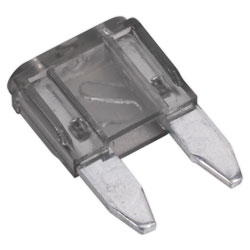
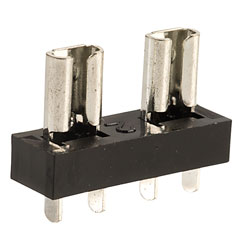
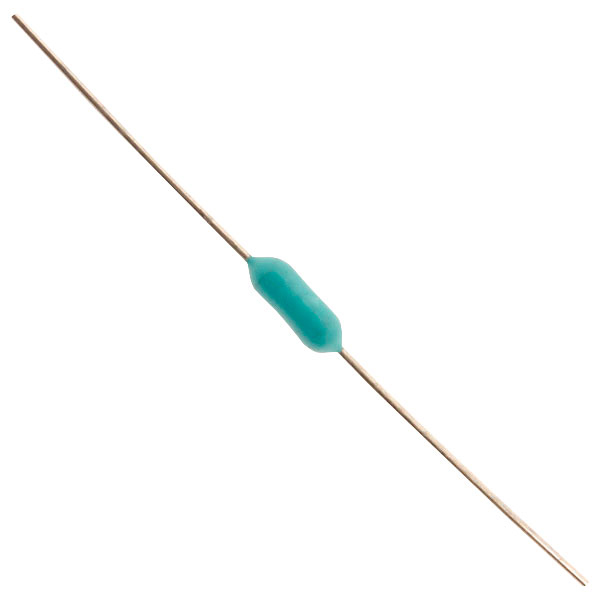
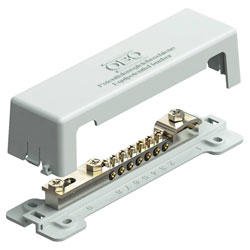
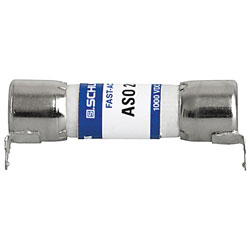
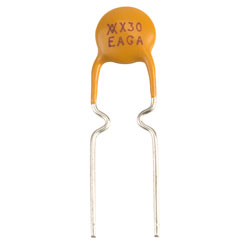
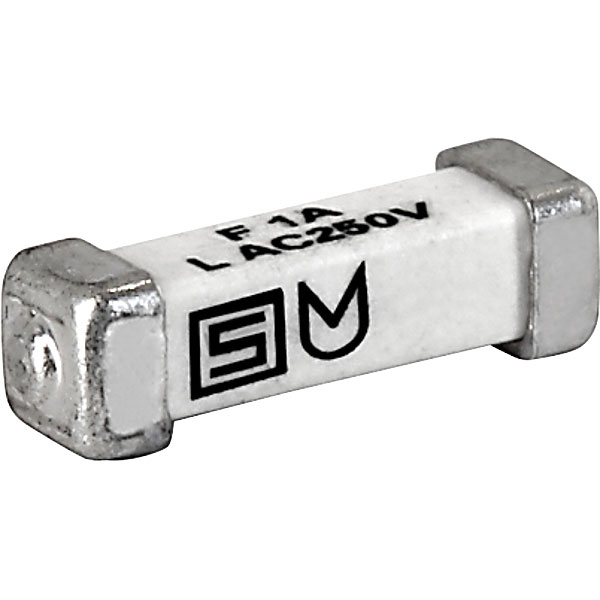
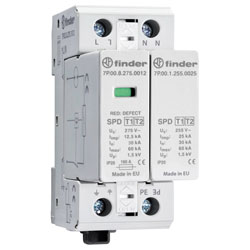
Protect a circuit with the right fuse or breaker — from cartridge, ceramic and blade fuses to PCB, resettable and industrial types, plus fuse holders and circuit breakers.
Our own brand, R-TECH, is a stronger fuse range than many realise — its cartridge fuses are a dependable & cost-effective alternative to the branded parts. In UK stock for next-day delivery, with technical back-up when you need it. Explore all of our own brands today.
Fuses & circuit breakers — buying guide & FAQs
A fuse or circuit breaker protects a circuit by cutting the current when it climbs too high. The right choice comes down to the type, the rating and the speed — see our guide to types of fuses, markings and speed codes to get it right.
What types of fuse are there?
Pair them with the right fuse holders, from inline and panel to DIN rail.
How do I choose a fuse?
- Current rating — in amps, matched to the circuit; never fit a higher rating than designed.
- Speed — quick-blow (F) for sensitive electronics, anti-surge / time-delay (T) for motors and supplies.
- Voltage rating — rated at or above the circuit voltage.
- Size and body — 20mm or 32mm, glass or ceramic; ceramic gives higher breaking capacity.
Not sure which to specify? Our technical team will help, and we supply bespoke quantities when a project needs them.
Circuit breakers
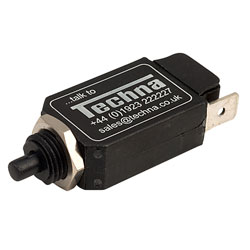
Where a resettable device suits better than a fuse, we stock circuit breakers — MCBs for overload and short-circuit protection, RCDs for earth-leakage protection, and RCBOs that combine both. For the detail, see our guide on MCBs, RCDs and RCBOs compared.
R-TECH — a stronger fuse range than you'd expect
Our own R-TECH cartridge fuse range is a genuine hidden strength: dependable, cost-effective alternatives to the branded parts, matched on rating, speed and size, and backed by full datasheets so you can specify with confidence. Held in UK stock, with technical support from people who know the products.
Fuses and breakers sit within our wider power range.
Fuses & circuit breakers — frequently asked questions
What is a cartridge fuse?
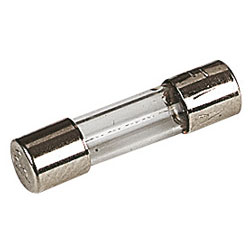
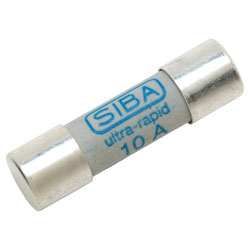
A cartridge fuse is a self-contained fuse in a glass or ceramic tube with metal end caps, common sizes being 20mm and 32mm. The wire inside melts to break the circuit on overcurrent. Ceramic bodies handle higher breaking capacity than glass.
What is the difference between a quick-blow and an anti-surge fuse?
A quick-blow (F) fuse breaks almost instantly on overcurrent, protecting sensitive electronics. An anti-surge or time-delay (T) fuse tolerates a brief inrush, so it suits motors and power supplies that draw a surge at switch-on. Match the type to the load.
What size cartridge fuse do I need?
Match the physical size (commonly 20mm or 32mm long), the current rating in amps, the voltage rating and the speed (quick-blow or anti-surge) to your circuit. Never fit a higher current rating than the circuit is designed for.
What is the difference between a fuse and a circuit breaker?
A fuse melts and must be replaced after it operates; a circuit breaker trips and can be reset. Fuses are simple and fast; breakers (MCB, RCD, RCBO) are reusable and can add earth-fault protection. Both protect a circuit from overcurrent.
What is the difference between an MCB and an RCD?
An MCB (miniature circuit breaker) protects against overload and short circuit. An RCD (residual current device) protects against earth leakage to guard against electric shock. An RCBO combines both in one device.


 {{SessionBasket.ItemCount }}