Insulated, uninsulated or heat shrink?
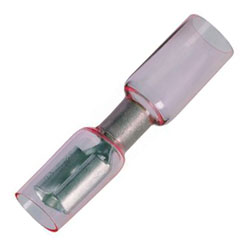
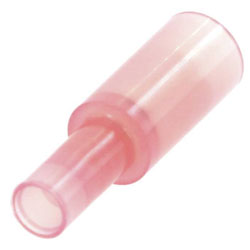
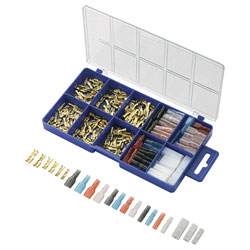
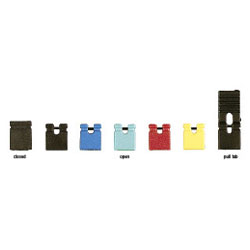
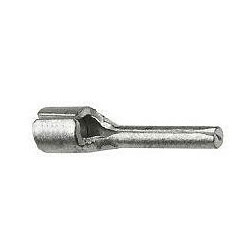
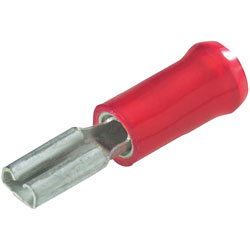
Pre-insulated terminals are the everyday choice, and their colour tells you the wire size: red for roughly 0.5 to 1.5mm², blue for 1.5 to 2.5mm² and yellow for 4 to 6mm². PVC insulation is the most common, while nylon grips the wire's own insulation better and copes with more heat. Heat shrink terminals have an adhesive-lined sleeve that seals the joint once it's warmed, which is what you want on vehicles, boats and outdoor kit. Uninsulated terminals suit high temperatures or tight spaces, finished with your own heat shrink tubing.
Matching the terminal to the job
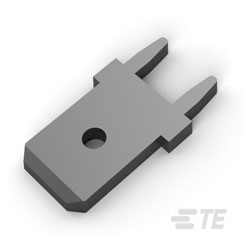
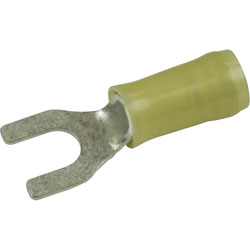
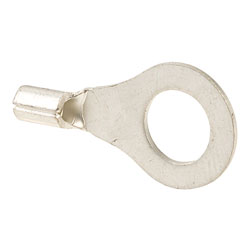
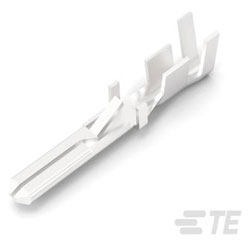
Ring terminals are the safest choice under a screw or stud, because they can't slip off even if the fixing loosens. Size them by the stud (M3, M4, M5 and so on) as well as the wire. Fork terminals trade a little of that security for convenience, since they slide on and off without removing the screw. Spade connectors and blade terminals make push-on joints. The 6.3mm tab is the most common, with 4.8mm and 2.8mm for smaller jobs, so match the receptacle to the tab. Our guide to spade connectors covers the detail.
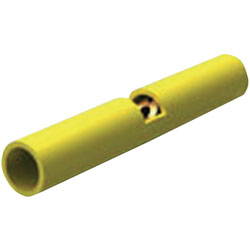
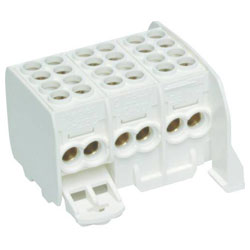
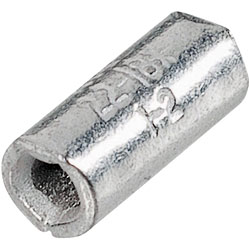
To join wires rather than terminate them, butt connectors join two ends in line, and splice connectors tap into or link several conductors.
Ferrules for panel wiring
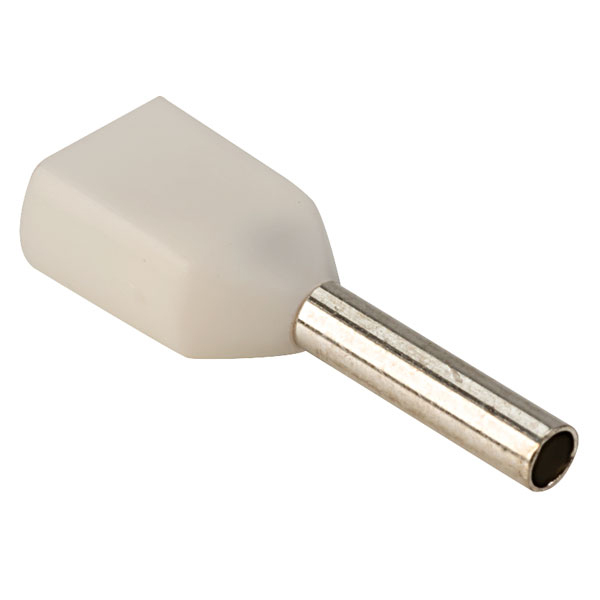
Bootlace ferrules stop fine-stranded wire from splaying inside terminal blocks and give the clamp something solid to grip. One thing to watch: two different colour codes are in use, so a given colour doesn't always mean the same size between manufacturers. Go by the size printed on the product, not the colour alone.
The tool matters as much as the terminal
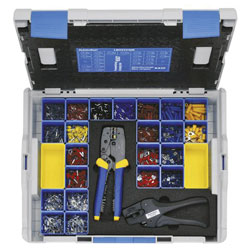
A ratchet crimping tool with the right dies for the terminal type applies the full force every time and won't release until the crimp is complete. Pliers just squash the barrel, and that joint is the one that'll pull out or run hot later. Find the right tool in our crimping tools, or start with a crimp kit. Our guide on what makes a good crimp shows what to look for.
TruComponents: our own crimp range
Our own TruComponents range takes in the terminals you reach for daily, insulated and uninsulated, sized and rated like the branded parts and priced to keep high-volume wiring affordable. Consistent quality from batch to batch means the hundredth panel is wired as reliably as the first.
Crimp terminal questions
Should I solder a crimp as well?
Generally, no. Solder wicks up the strands and creates a stiff point just behind the barrel, and that's exactly where the wire tends to fracture under vibration. A correct crimp with the right tool doesn't need it.
Are spade connectors and blade terminals the same thing?
They're two halves of the same joint. The blade (or tab) is the male part, and the female receptacle that pushes onto it is often called a spade connector, though some people use "spade" for the fork terminal too. Check the product picture if in doubt.
What's the difference between a butt connector and a splice?
A butt connector joins two wires end to end in a single sleeve. A splice connector can also tap into a run or join several conductors together. Both are crimped, and sealed versions are available for wet environments.
What size ring terminal do I need?
Match two things: the wire size, which sets the barrel colour, and the stud or screw diameter, which sets the hole. A ring that's too big for the stud has less contact area and can work loose.
What are turrets and solder tags for?
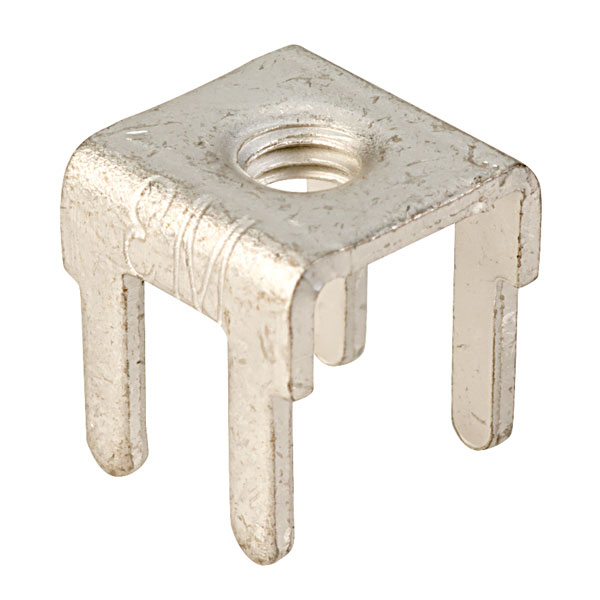
They're anchor points for point-to-point wiring, used on tag boards, valve amplifiers and other hand-wired equipment. See turrets, posts, strips and boards and solder tags.


 {{SessionBasket.ItemCount }}