We use cookies on our website to ensure you get the best possible experience – they allow us to tailor content specifically to you, analyse our website to help make improvements, and display ads that are applicable to you across other websites. If you’re happy with this, please select “Allow all", or personalise the cookies you allow with “Manage”. Clicking on “Reject non-essential” will remove these cookies, but the site may not function to its best abilities. For more information, please visit our cookie policy
2026 marks a clear turning point for robotics and industrial automation. What was once seen as a long-term efficiency play has become a near-term necessity for manufacturers across almost every sector.
Rising operational costs, persistent skilled labour shortages and increasing pressure to digitise production are forcing a rethink of how factories are designed and run. At the same time, customer expectations around quality, lead times and traceability continue to rise, often without any tolerance for higher prices.
As a result, manufacturers are moving away from experimental or isolated automation projects and toward fully integrated, scalable automation strategies. This shift is redefining the standard for industrial automation, moving it from a luxury for large-scale plants to a baseline requirement for competitive manufacturing. Robotics in 2026 is no longer about “can we automate this?”, but “how quickly can we deploy, adapt and scale automation across the entire operation?”.
The acceleration of AI-driven robotics
Artificial intelligence is fundamentally changing what industrial robots are capable of. In 2026, the traditional complexity of robot programming is being replaced by intuitive, self-learning systems. Robots are no longer limited to rigid, pre-programmed routines; instead, they utilise machine learning to navigate unstructured environments. AI enables machines to adapt to variation, learn from process data and make decisions in real time.
On the factory floor, this shows up in several ways:
Robots adjusting grip, speed or trajectory based on live sensor feedback
Vision systems identifying defects or variations without constant re-teaching
Predictive maintenance models flagging wear or failure risks before downtime occurs
Rather than reacting to problems, AI-driven systems and AI-driven robots anticipate them. This shift is particularly valuable in high-mix, low-volume environments where changeovers are frequent and consistency is hard to maintain. AI-driven robots can autonomously adjust to new part geometries or changing floor layouts without requiring a complete system overhaul.
Behind the scenes, these intelligent robots still rely on robust control architectures. Industrial PLCs remain central, providing deterministic control logic and acting as the bridge between AI systems and physical machinery. The difference in 2026 is that PLCs are increasingly managing smarter, more autonomous assets - not just executing static instructions.
How does Agentic AI differ from traditional robot programming?
Traditional robotics relies on rigid, rule-based code where every "if-then" scenario must be pre-defined. Agentic AI combines analytical data processing with generative reasoning, allowing robots to plan their own paths and adapt to unseen obstacles without human intervention. This shift enables "lights-out" shifts where robots handle complex, variable tasks autonomously overnight.
Top brands in PLCs
IT/OT Convergence: The new backbone of automation
One of the most important, and often underestimated, trends shaping automation in 2026 is the convergence of IT (information technology) and OT (operational technology).
The successful implementation of IT/OT convergence allows for a unified data stream where maintenance alerts from the factory floor automatically trigger parts-ordering in the ERP system.
Historically, factory machines operated in isolation, while business systems lived elsewhere. That separation no longer works. Manufacturers now expect real-time visibility from sensor to boardroom, and that requires seamless data flow between machines, control systems and enterprise platforms.
IT/OT convergence enables:
Real-time production monitoring and performance analysis
Faster fault diagnosis and reduced downtime
Easier integration of MES, ERP and analytics platforms
Modern automation architectures are built on open, high-performance industrial networking and connectivity. These networks allow machines, robots, sensors and control systems to communicate reliably and securely, creating a unified digital backbone for the plant.
In 2026, connectivity isn’t an add-on - it’s a core design requirement.
As manufacturers move toward smarter, more connected automation architectures, Brainboxes stands out as the right choice, offering UK‑built industrial networking hardware that delivers the reliability, performance and long-term support modern plants depend on.
Humanoid and collaborative robots go mainstream
Collaborative robots (cobots) and early-stage humanoid robots are moving beyond pilot projects and into regular production use. These cobots, in particular, are proving their value where flexibility matters: working safely alongside humans without extensive guarding. While fully humanoid robots are still emerging, their influence is already shaping how manufacturers think about automation.
Cobots, in particular, are proving their value where flexibility matters:
Working safely alongside humans without extensive guarding
Being redeployed quickly as production needs change
Handling tasks that combine precision with variability
These systems reduce the need for fixed, single-purpose automation cells and make it easier to automate processes that were previously considered “too manual”.
At the heart of this flexibility is precise motion control. High-performance servo motors and drives enable smooth, accurate and responsive movement, essential for safe human-robot interaction and adaptable workflows. As robots become more collaborative and mobile, motion quality becomes just as important as speed or payload.
How do collaborative robots (cobots) ensure safe human-machine interaction?
Unlike traditional industrial robots that require safety cages, cobots use a combination of force-torque sensors and 3D vision algorithms to detect human presence. In 2026, advanced "collaborative applications" allow these robots to instantly adjust their speed, force, and trajectory the moment an operator enters their workspace, preventing collisions while maintaining high-speed production.
Interoperable, modular automation systems take over
Manufacturers are increasingly rejecting closed, proprietary automation systems in favour of interoperable, modular platforms. The reason is simple: siloed systems slow everything down.
In 2026, production lines need to evolve constantly, new products, new materials, new regulations. Modular automation makes this possible by allowing components to be added, replaced or upgraded without redesigning the entire system.
Interoperability delivers tangible benefits:
Faster commissioning and reconfiguration
Easier integration of multi-vendor equipment
Reduced long-term lifecycle risk
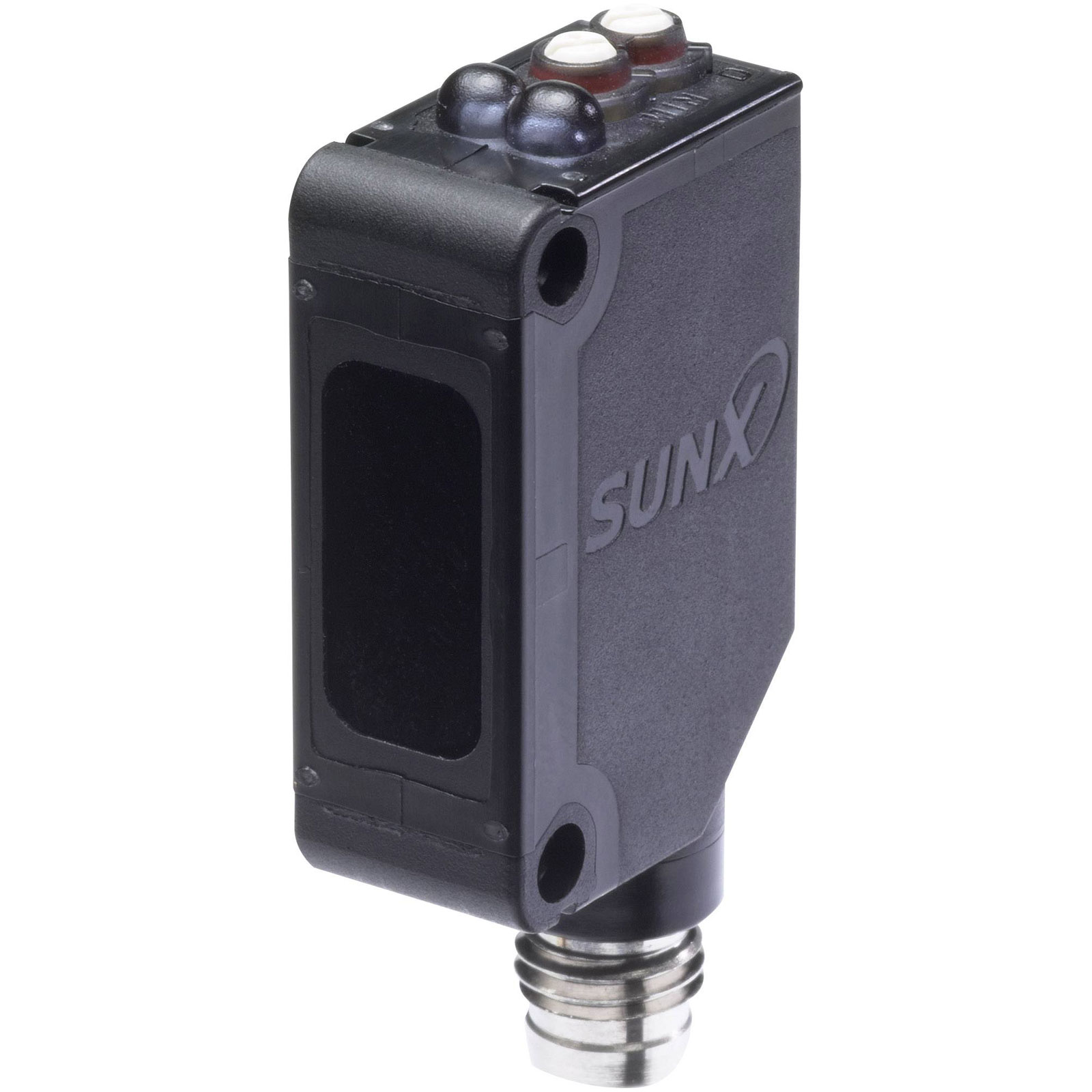
Sensors play a critical role in this shift. Modern industrial sensors provide high-quality, real-time data that feeds closed-loop automation systems. When sensors, controllers and actuators speak a common language, processes become more stable, more efficient and easier to optimise.
Our pick‑and‑place robotics guide expands on this, emphasising the vital role of sensors and feedback systems and featuring the recommended products below:
One of the biggest misconceptions around automation is that it’s primarily about replacing people. In reality, manufacturers adopting automation successfully in 2026 are using it as a workforce strategy. The integration of robotics plus automation is a workforce multiplier.
Robots are increasingly assigned to tasks that are repetitive, physically demanding or ergonomically risky. This improves safety, reduces fatigue and makes industrial roles more sustainable, especially in tight labour markets.
At the same time, workers are moving into higher-value roles:
Operating and supervising automated cells
Analysing production data
Maintaining and improving automation systems
Automation allows human workers to focus on the high-level supervision and maintenance of the very robotics systems that support them.
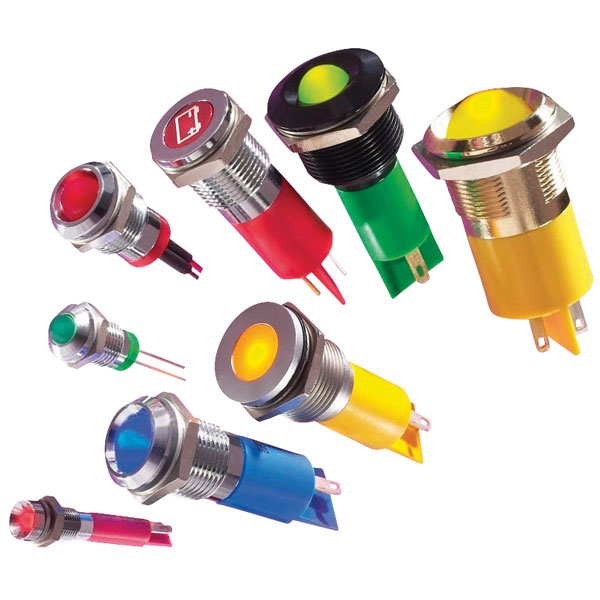
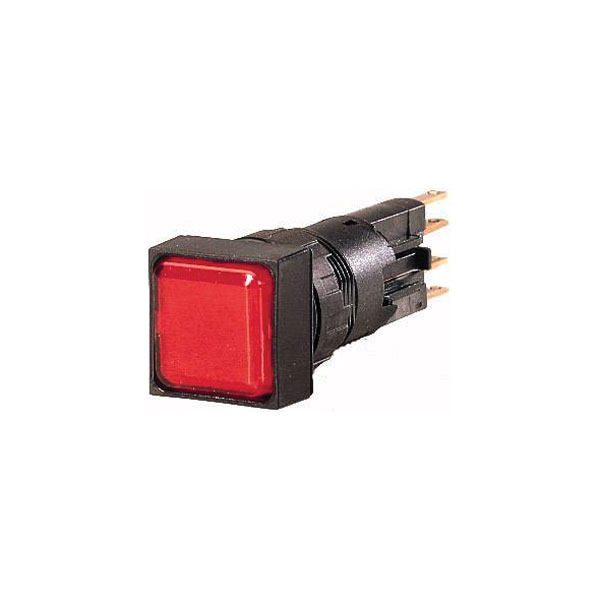
Safe human-machine collaboration is critical here. Well-designed robot cells incorporate safety interlock switches and other protective devices to ensure access control, fault prevention and compliance with safety standards. Automation that feels safe is automation that gets adopted.
Market rebound: why 2026 is the year to invest
After several years of cautious spending, many manufacturers are releasing delayed automation investments in 2026. The shift isn't just about individual machines; it’s about a total commitment to automation as a hedge against market volatility. Companies now view robotics as the primary driver for scale, particularly in high-precision sectors. Uncertainty around supply chains, energy costs and global markets slowed adoption between 2023 and 2025, but those pressures haven’t disappeared.
Instead, companies are recognising that delaying automation now creates competitive risk.
Growth is particularly strong in:
Pharmaceuticals and life science
FMCG and packaging
Electronics and semiconductor manufacturing
EV and battery production
In these sectors, speed, consistency and traceability are non-negotiable. Manufacturers that invest in automation now are better positioned to absorb demand spikes, manage labour challenges and respond to market changes faster than those that wait.
Practical steps for manufacturers adopting 2026 automation
Manufacturers looking to modernise in 2026, a path to successful robotics and automation implementation, should focus on practical, scalable actions:
Standardise on interoperable automation components to reduce integration complexity
Strengthen plant networking infrastructure to support real-time data flow
Invest in AI-ready robotics platforms that can evolve with software updates
Integrate robust safety hardware and protocols from the start
Develop operator training programmes focused on automation supervision and optimisation
The goal isn’t to automate everything at once, but to build a foundation that supports continuous improvement.
Your next steps
Automation in 2026 is defined by intelligence, connectivity and adaptability. AI-driven robots, converged IT/OT systems, modular architectures and collaborative automation are no longer emerging trends, they're becoming the standard.
Manufacturers that succeed will be those who move quickly, design for flexibility, and use data to drive decisions at every level of the operation. Those who delay risk falling behind competitors who can produce faster, safer and more efficiently.
The message is clear: modernise now, build for change and treat automation as a strategic capability - not just a capital expense.


 {{SessionBasket.ItemCount }}