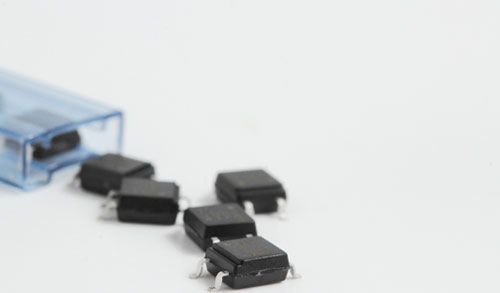
In modern electronics, safety and reliability are non-negotiable. Electrical isolation prevents dangerous voltage spikes, reduces interference, and protects sensitive components. One of the most effective ways to achieve this isolation is through optocouplers—compact devices that use light to transmit signals between circuits without direct electrical contact.
What is an optocoupler?
An optocoupler, also known as an optical isolator, is an electronic component that transfers electrical signals using light. It consists of two main parts:
This design ensures that the input and output circuits remain electrically isolated, even though they communicate seamlessly.
How optocouplers work
The principle is simple yet powerful:
- The input circuit sends a signal to the LED inside the optocoupler.
- The LED emits light proportional to the signal.
- The photodetector on the output side receives the light and converts it back into an electrical signal.
Because the signal travels via light, there is no direct electrical connection, which eliminates the risk of high-voltage transfer and interference.
Why electrical isolation matters
Electrical isolation is critical for:
- Safety: Prevents high-voltage shocks from reaching low-voltage control circuits.
- Noise reduction: Minimizes electromagnetic interference (EMI) between circuits.
- Reliability: Protects sensitive microcontrollers and sensors from voltage surges.
Key benefits of optocouplers
- Enhanced safety: Ideal for isolating control systems from power electronics.
- Signal integrity: Reduces noise and distortion in data transmission.
- Versatility: Works in AC and DC circuits across various voltage ranges.
- Compact design: Fits easily into modern PCB layouts.
Common applications in electronics
Optocouplers are widely used in:
- Switching power supplies: Isolating feedback loops.
- Microcontroller interfaces: Protecting logic circuits from high-voltage sections.
- Industrial automation: Ensuring safe signal transfer in harsh environments.
- Medical equipment: Maintaining patient safety by isolating sensitive electronics.
- Communication systems: Reducing interference in data lines.
How to choose the right optocoupler
When selecting an optocoupler, consider:
- Voltage rating: Ensure it matches your circuit requirements.
- Speed: High-speed optocouplers are essential for data communication.
- Current Transfer Ratio (CTR): Indicates efficiency of signal transfer.
- Package type: Choose based on space and mounting needs.
Optocouplers vs other isolation methods
- Transformers: Great for power isolation but bulky and limited to AC signals.
- Digital isolators: Faster and more advanced but often costlier.
- Optocouplers: Affordable, compact, and suitable for both AC and DC signals.
Future trends in optocoupler technology
With the rise of IoT, electric vehicles, and smart grids, optocouplers are evolving to:
- Handle higher data rates.
- Offer better thermal stability.
- Integrate with advanced semiconductor materials for improved performance.
Build safer circuits today
Optocouplers are a cornerstone of safe and reliable electronic design. By providing electrical isolation, they protect circuits, reduce interference, and ensure long-term system stability. Whether you’re designing power supplies, industrial controls, or consumer electronics, optocouplers remain an essential component for modern engineering.
Browse full range

 {{SessionBasket.ItemCount }}