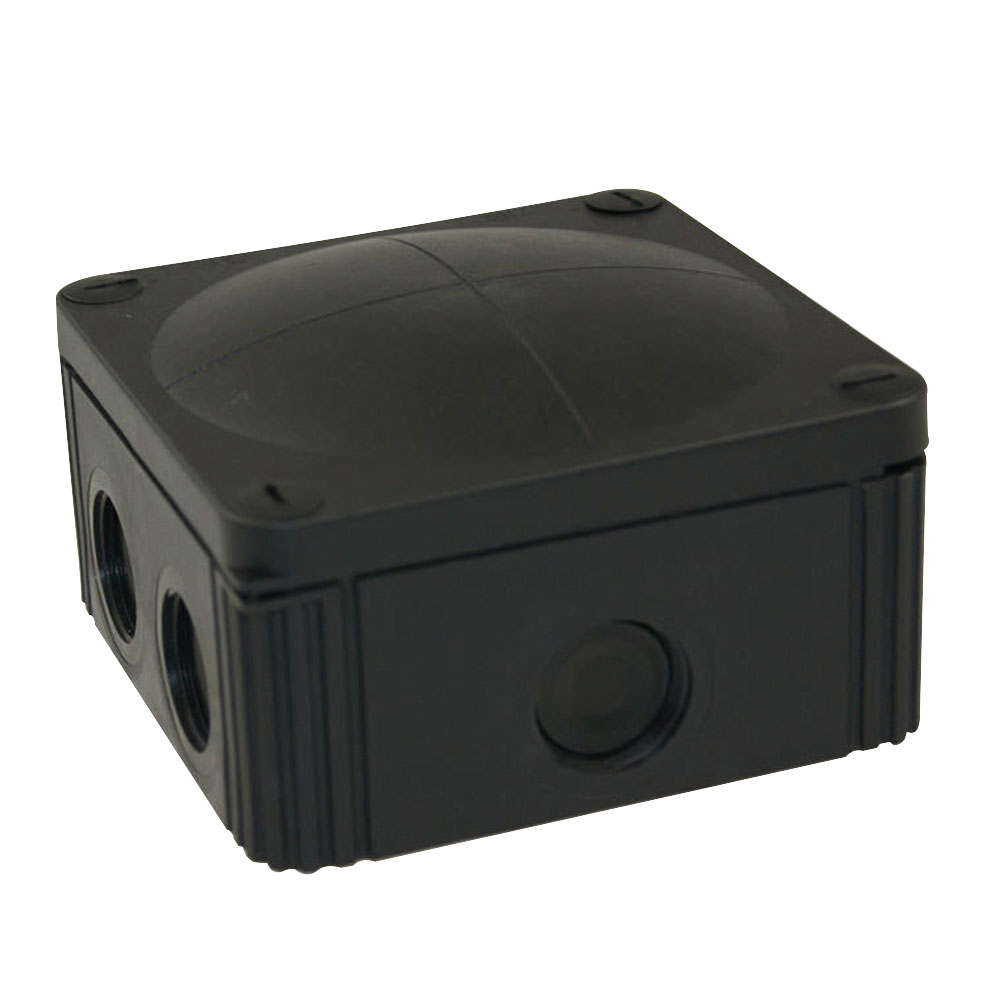
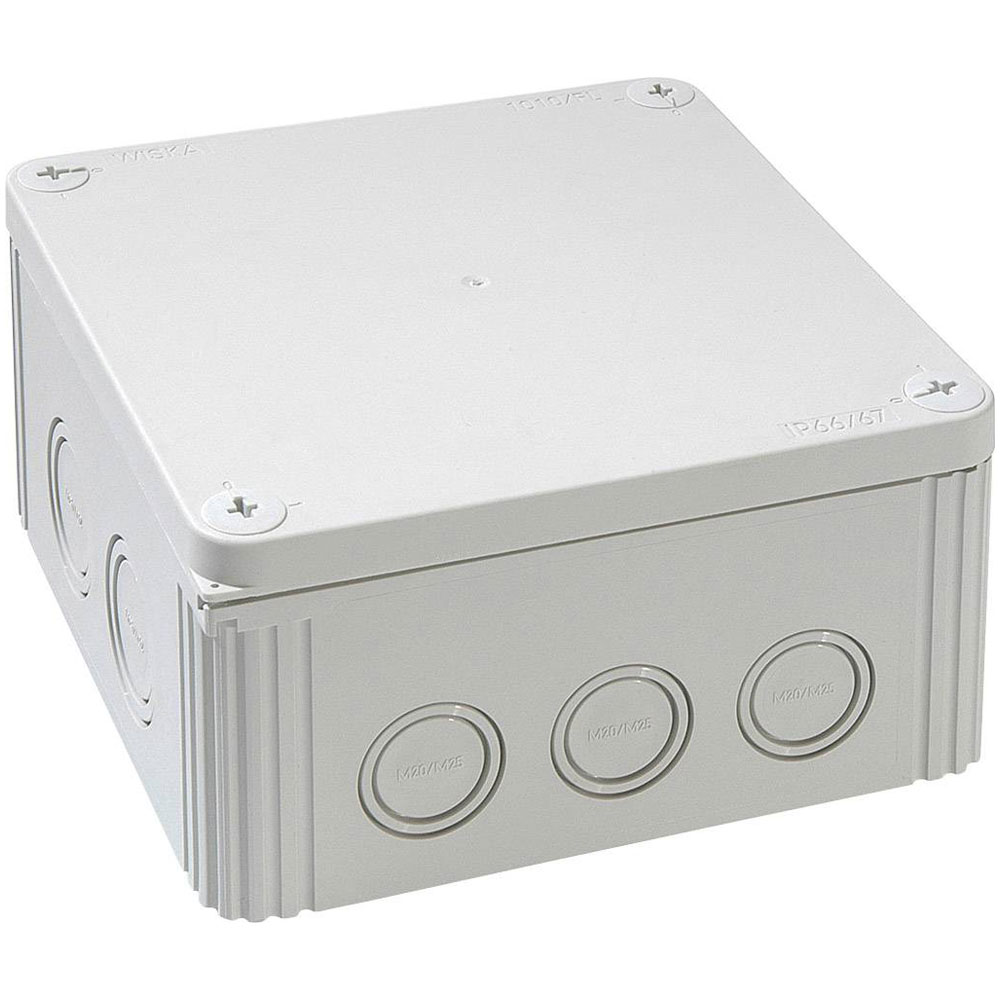
Junction boxes are among the most common components in industrial electrical and automation systems - and also among the most underestimated.
While they’re often treated as simple enclosures, junction boxes play a critical role in how reliably power and signals are distributed, how easily systems can be maintained, and how well an installation holds up over time. When junction boxes are poorly specified or planned as an afterthought, problems tend to surface slowly: intermittent faults, difficult maintenance and avoidable downtime.
This guide focuses on what actually matters when selecting and designing junction boxes - based on real operating conditions, not marketing checklists.
What a junction box really does (beyond “housing wires”)
At its core, a junction box performs three essential functions:
- Protects electrical connections from environmental, mechanical and accidental damage
- Organises power and signal distribution in a controlled, serviceable way
- Creates clear interface points between field devices, machines and control systems
The third point is often overlooked. A well-designed junction box makes a system easier to understand, test, isolate, and expand, all of which matter far more over a system’s lifetime than the box itself.
Why junction box design impacts long-term reliability
Many electrical issues blamed on sensors, PLCs, or field devices originate inside junction boxes.
Common long-term failure drivers include:
- Overcrowded enclosures with no allowance for future wiring
- Loose connections caused by vibration or thermal cycling
- Moisture ingress due to condensation, not direct water exposure
- Poor internal layout leading to signal interference
These issues rarely appear during commissioning. They show up months or years later, when systems are under pressure and downtime is costly.
Designing for reliability means thinking beyond initial installation and planning for how the junction box will behave over time.
Choosing the right junction box: what actually matters
Instead of focusing solely on headline specifications, experienced engineers consider how a junction box will be used and maintained.
Key considerations include:
Environment
IP ratings are important, but they don’t tell the whole story. Temperature variation, cleaning regimes, vibration, UV exposure and chemical contact all influence enclosure performance over time.
Space and Layout
Leaving physical and electrical space inside the box makes future changes easier and reduces the risk of heat build-up or wiring damage.
Access and Maintenance
Junction boxes are opened far more often than many other components. Gasket durability, fastener quality and internal clarity all affect how safe and efficient maintenance work will be.
Signal Management
Separating power and data, planning grounding paths and avoiding unnecessary cable crossings helps protect signal integrity - especially in sensor-dense systems.
Junction boxes as part of a maintainable system
One of the clearest signs of a well-designed installation is how easy it is to troubleshoot.
Good junction box practices:
✔
Clear wiring routes
Supports logical cable paths that are easy to follow during inspection or maintenance.
✔
Quick circuit isolation
Allows sections of an installation to be isolated without disrupting the entire system.
✔
Clear labelling support
Provides space and structure for consistent circuit identification and documentation.
When a fault occurs, technicians shouldn’t need to dismantle half a machine to find the problem. Junction boxes that act as logical distribution and isolation points reduce diagnosis time and improve safety.
The role of connection technology inside the box
The enclosure is only half the story. What happens inside the junction box plays a critical role in long-term reliability, safety, and ease of installation. Poor internal connection methods can introduce failure points through vibration, thermal cycling, moisture ingress, or inconsistent installation practices.
This is where the design philosophy behind the junction box itself matters. High-quality junction boxes are engineered not just as protective shells, but as systems that support reliable cable entry, strain relief, and stable internal connections over the lifetime of the installation.
WISKA has built a strong reputation in this area by treating junction boxes as engineered components rather than commodities. Their junction box ranges are designed to support consistent, repeatable wiring through features such as robust cable management, reliable sealing systems and layouts that simplify termination and inspection. This focus helps deliver:
- Reliable electrical connections in demanding industrial environments
- Faster, cleaner installation with reduced risk of wiring errors
- Long-term performance where vibration, temperature changes, or moisture are present
With an exceptionally wide range of junction box sizes, materials and ingress protection ratings, WISKA solutions scale easily from simple installations to complex industrial systems. Rather than being fixed, disposable components, their junction boxes are designed to support real-world maintenance, modification and system expansion - aligning closely with how modern industrial installations actually evolve.
Planning for change: designing junction boxes that age well
Industrial systems rarely stay static. New sensors are added, processes change, and production requirements evolve.
Junction boxes that “age well” tend to:
- Include spare terminals and wiring capacity
- Use standardised components across sites
- Allow reconfiguration without complete rewiring
Designing for change doesn’t increase complexity - it reduces it over the system lifecycle.
Common mistakes to avoid
Even experienced teams fall into predictable traps:
- Treating junction boxes as a commodity purchase
- Oversizing protection but undersizing internal space
- Mixing incompatible signal types without planning
- Ignoring how often a box will be accessed
Avoiding these mistakes costs little, but correcting them later is often expensive.
Getting the fundamentals right
Junction boxes may not be the most visible part of an electrical system, but they are among the most influential.
When thoughtfully selected and designed, they improve reliability, simplify maintenance, and make future changes easier. When overlooked, they quietly introduce risk and inefficiency that compounds over time.
For engineers, specifiers, and maintenance teams alike, junction boxes are not just enclosures — they are part of the system’s foundation. Getting them right is one of the simplest ways to build electrical installations that last.
View junction boxes

 {{SessionBasket.ItemCount }}