In industrial automation and process control, precision is everything. Whether you're managing a chemical reaction, monitoring HVAC systems, or ensuring food safety, accurate temperature measurement is essential. Temperature sensors play a vital role in maintaining product quality, operational efficiency, and regulatory compliance across a wide range of industries.
For design engineers, selecting the right temperature sensor means balancing accuracy, response time, durability, and integration with control systems.
What are temperature sensors and how do they work?
Temperature sensors are devices that detect and convert thermal energy into readable signals. These signals can be analog or digital, depending on the sensor type and application. Common types include:
- Thermocouples – rugged and fast-responding, ideal for high-temperature environments
- RTDs (Resistance Temperature Detectors) – highly accurate and stable, used in precision applications
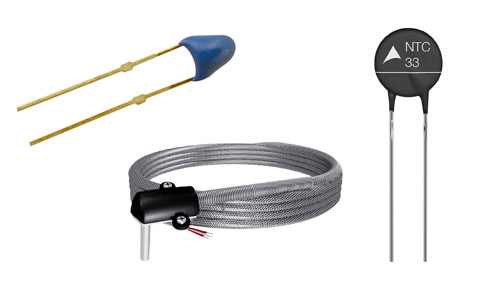
- Thermistors – sensitive and cost-effective, suitable for lower temperature ranges
- Digital temperature sensors – easy to integrate with microcontrollers and PLCs
Each sensor type has its own strengths. For example, thermocouples are often used in furnaces and kilns, while RTDs are preferred in pharmaceutical and food processing for their accuracy.
Applications in industrial process monitoring
Temperature sensors are embedded throughout industrial systems to monitor and control processes in real time. Key applications include:
- Manufacturing – controlling heat in molding, welding, and curing processes
- Thermocouples remain one of the most widely adopted industrial temperature sensors due to their fundamental suitability for extreme environments.
- RTDs are strategically deployed in manufacturing processes requiring high precision and fine-tuning, such as regulating chemical reactions or curing processes where slight temperature deviations critically impact product quality and consistency.
- Modern manufacturing, driven by Industry 4.0, increasingly relies on advanced digital temperature sensing technologies, including IoT-enabled monitoring systems.
- HVAC and building automation – maintaining climate control and energy efficiency
- Thermistors are extensively used for general room and ventilation measurements. Their very high sensitivity to detect small temperature changes makes them the most functionally appropriate and cost-effective choice for air sensing.
- RTDs are utilized for applications demanding higher stability, particularly for water sensing like chilled and hot water loops.
- Food and beverage – ensuring safe cooking, storage, and transport conditions
- Both RTDs and thermocouples are utilized, provided they meet the stringent sanitary design specifications, which include mounting into sanitary thermowells or using flush-mount designs for mixing vessels. However, the choice is heavily weighted toward high-precision RTDs for Critical Control Points (CCPs).
- Temperature sensors are vital for ensuring the efficacy of CIP systems.
- Chemical and pharmaceutical – monitoring reactions and maintaining sterile environments
- RTDs are the preferred sensor technology in this sector because their superior accuracy, stability, and repeatability provide the essential measurements required for batch validation and calibration demanded by regulatory bodies.
In these settings, sensors are often paired with controllers, alarms, or data loggers to automate responses and maintain consistent conditions.
For design engineers, integrating temperature sensors into a system requires careful consideration of sensor placement, wiring, shielding, and calibration. Environmental factors such as vibration, moisture, and electromagnetic interference can affect performance, so choosing robust components is key.
Selecting the right temperature sensor
- Measurement range and accuracy
- Response time and stability
- Sensor housing and protection (IP rating, material)
- Output type (analog, digital, thermocouple millivolts)
- Compatibility with control systems or PLCs
It’s also important to consider long-term reliability and maintenance. Sensors exposed to harsh conditions may require periodic recalibration or replacement, so accessibility and documentation are important.
Conclusion
Temperature sensors are essential for accurate process monitoring in industrial environments. For design engineers, choosing the right sensor ensures consistent performance, safety, and compliance across a wide range of applications.
Browse temperature sensors