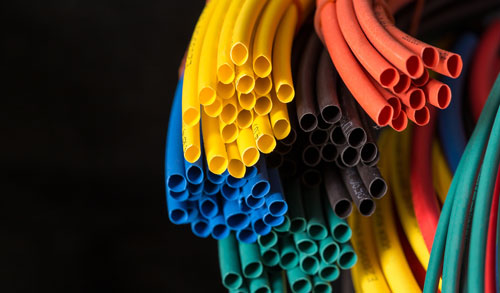
In industrial environments, electrical installations face constant exposure to moisture, abrasion, vibration, and temperature fluctuations. One of the simplest yet most effective ways to protect these connections is through heat shrink tubing. Widely used across manufacturing, maintenance, and field service applications, heat shrink tubing provides insulation, strain relief, and environmental protection for wires, terminals, and connectors.
What is heat shrink tubing and how does it work?
Heat shrink tubing is a thermoplastic tube that shrinks in diameter when heated, tightly conforming to the shape of the underlying material. It’s commonly used to insulate exposed wires, reinforce cable joints, and bundle wiring for improved organisation and safety.
Available in various diameters, shrink ratios, and materials, heat shrink tubing can be tailored to suit different voltage ratings, chemical exposures, and temperature ranges. For example, polyolefin tubing is popular for general-purpose use, while adhesive-lined variants offer enhanced sealing against moisture and contaminants.
Industrial benefits of heat shrink tubing
For operations managers, heat shrink tubing offers several practical advantages:
- Electrical insulation: Prevents short circuits and improves safety in high-voltage environments.
- Mechanical protection: Shields cables from abrasion, vibration, and bending stress.
- Environmental sealing: Protects against moisture, dust, and corrosive substances, especially important in outdoor or harsh environments.
- Identification and organisation: Available in multiple colours, heat shrink tubing helps with circuit identification and maintenance efficiency.
These benefits make heat shrink tubing a go-to solution for maintenance teams working on control panels, junction boxes, motor connections and field repairs.
Choosing the right heat shrink tubing
When selecting heat shrink tubing, consider:
Shrink ratio
Common options include 2:1, 3:1, and 4:1 - higher ratios accommodate irregular shapes or larger connectors.
Material type
Polyolefin is versatile and flame-retardant; fluoropolymer tubing offers chemical resistance; adhesive-lined tubing provides waterproof sealing.
Operating temperature
Ensure the heat shrink tubing temperature matches the thermal demands of your application.
Compliance
Look for UL-rated or RoHS-compliant products for regulated environments.
Extra information worth knowing...
- Polyolefin tubing - It is the standard foundation for heat shrink. Plus it is flexible, and has superior electrical properties like high dielectric strength.
- Fluoropolymer tubing - Their characteristics, which also include low friction, non-stick surfaces, and non-toxicity, make them essential for high-reliability components, such as those used in aerospace, medical devices, and demanding industrial sensor encapsulation.
- Adhesive-lined tubing - Adhesive-lined tubing features a dual-wall construction, consisting of a durable outer polyolefin jacket and a meltable inner adhesive layer. When heated, the outer layer shrinks while the inner adhesive melts and flows, filling all voids to create a permanent, moisture-resistant seal. This architecture is essential for achieving strain relief and a completely waterproof barrier in harsh environments, such as marine, underground, or heavy-duty automotive applications.
For industrial buyers, stocking a range of tubing sizes and colours can streamline maintenance and reduce downtime during repairs.
Get started
Heat shrink tubing plays a vital role in protecting and insulating electrical installations across industrial settings. Its versatility, ease of use, and reliability make it an essential component for operations managers focused on safety, uptime, and compliance.
Browse heat shrinks

 {{SessionBasket.ItemCount }}