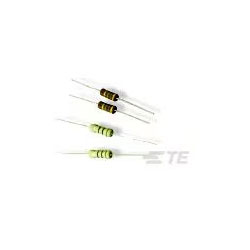
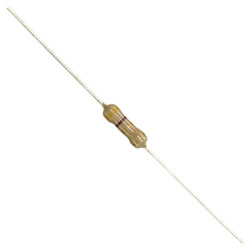
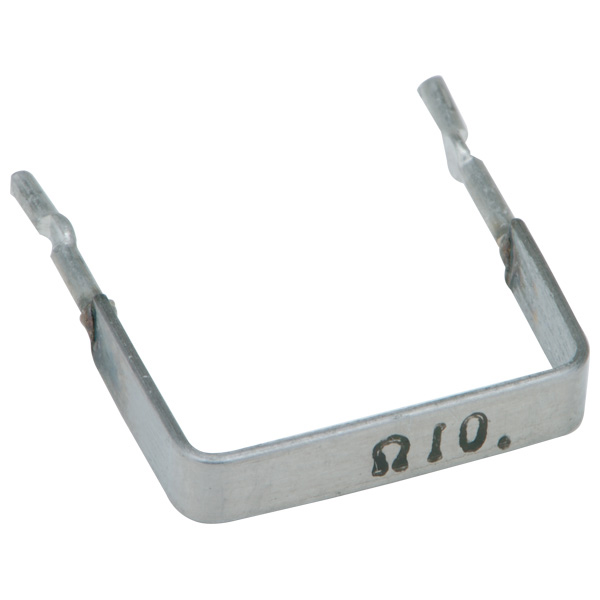
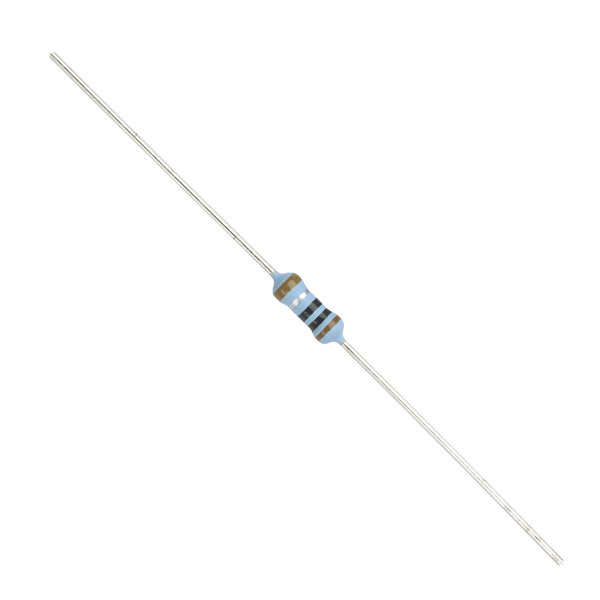
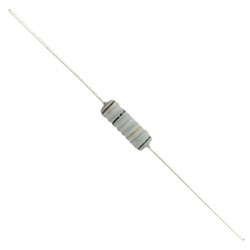
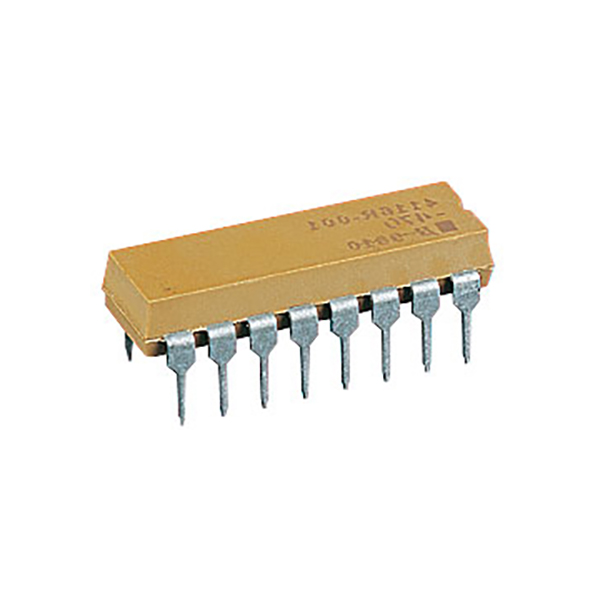
Every circuit needs the right resistance — and we hold it, from a single value to a full E-series. Choose between carbon film, metal film, wirewound, SMD, power and variable resistors.
Our own brand, TruComponents, is the go-to for everyday passives — with resistors across the values and tolerances you reach for daily, spec-matched to the branded parts for less. In UK stock for next-day delivery, with additional technical back-up when you need it. Discover more from all of our own brands today.
Resistors — buying guide & FAQs
A resistor limits the flow of current in a circuit, sets voltages and divides signals. We stock the complete working range — fixed and variable, through-hole and surface-mount — so you can specify with confidence and have the part on the bench tomorrow. For the theory, see our guide to resistors in industry.
What types of resistor are there?
- Carbon film — the everyday choice for general-purpose circuits; low cost, ±5% tolerance.
- Metal film — tighter tolerance and lower noise for precision and analogue work.
- Metal oxide — higher power and better surge handling than film for a similar size.
- Wirewound — high power and high accuracy, for current sensing, power supplies and braking loads.
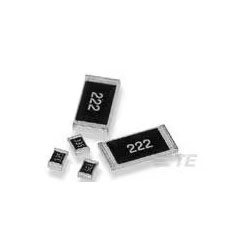
- SMD / surface-mount — thick- and thin-film chips in standard case sizes (0402, 0603, 0805, 1206) for compact and automated boards.
- Resistor networks and arrays — several matched resistors in one package to save board space.
For temperature-dependent parts, see our thermistors; for the wider passive range, browse passives.
How do I choose the right resistor?
- Value (Ω) — from the E-series of preferred values; common ones are 220R, 330R, 470R, 1k and 10k.
- Tolerance — ±5% carbon film for most work; ±1% metal film where accuracy matters.
- Power rating — choose a wattage comfortably above the power the resistor will dissipate.
- Package — through-hole for prototyping and repair, SMD for production boards.
Need to read the bands on a part? See our guide to resistor colour codes. Not sure which to specify? Our technical team will help you match a part, and we supply bespoke quantities when a project needs them.
Fixed or variable?
A fixed resistor has one set value; a variable resistor lets you adjust it. We carry potentiometers, presets and trimmers, and rheostats — see the full potentiometers range, or read understanding potentiometers for how they work.
TruComponents — the same spec, for less
Our own TruComponents resistors match the branded parts on value, tolerance, power rating and package. Viewing a branded part? We show the TruComponents equivalent beside it, so you can compare the spec and the price directly, then decide. Every part is matched to spec and backed by technical support from people who know the products.
You may also want capacitors and inductors & chokes for the rest of your passives.
Resistors — frequently asked questions
Which resistor type should I use — carbon film or metal film?
Carbon film is the low-cost choice for general-purpose circuits at ±5%. Metal film gives tighter ±1% tolerance and lower noise for precision and analogue work. For higher power, choose metal oxide or wirewound.
How do I test a resistor with a multimeter?
Set the meter to resistance (Ω), isolate one end of the resistor, and touch a probe to each lead. Compare the reading to the marked value, allowing for tolerance. A reading of zero or infinity means it has failed. See our hand-held multimeters.
What is the difference between a potentiometer and a variable resistor?
A potentiometer is a three-terminal variable resistor wired as an adjustable voltage divider. A rheostat uses two terminals to vary current directly. Both let you adjust resistance; the wiring decides which job they do.
Do you sell resistor kits and packs?
Yes — we stock assorted resistor kits and value packs for prototyping and bench stock, as well as individual values in the quantity you need, with bespoke quantities on request.


 {{SessionBasket.ItemCount }}